
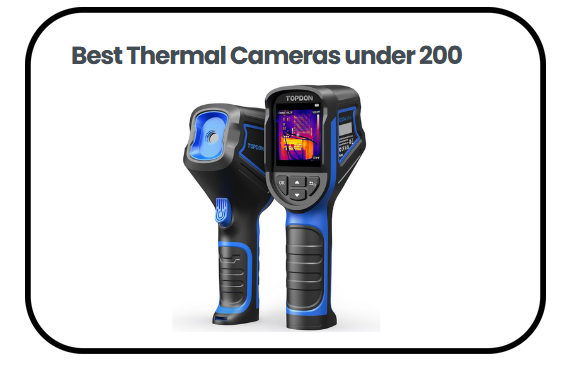
The best thermal cameras under 200 have genuinely impressed me with how much performance they deliver without breaking the bank. When I started exploring this category, I discovered features like enhanced resolution, wide temperature ranges, smart alerts, and durable builds that manufacturers once reserved for much pricier equipment. Whether you are a homeowner tracking heat loss, a technician diagnosing electrical faults, or a DIY enthusiast tackling HVAC issues, these cameras deliver real, practical value at an accessible price point.
In this guide, I will walk you through the standout features to look for, my top picks in this category, a comprehensive buying guide to help you make the right choice, and answers to the most frequently asked questions so you can shop with confidence.
Here is a summary of the Best Thermal Cameras under 200:
- TOPDON TC004 Mini Thermal Imaging Camera — Best Overall
- HF96 Thermal Camera with Laser Pointer — Best for Intelligent Fault Detection
- FOXWELL RT280 Thermal Imaging Camera — Best for Professional Analysis
- TOPDON TC001 Thermal Camera — Best High-Resolution Smartphone Camera
- AccuMEMS GT14S Thermal Imaging Camera — Best for Dual-Mode Diagnostics
- AMPBANK M256 Thermal Camera — Best for 3D Thermal Analysis
- Thermal Master P1 Thermal Camera — Best for Multi-Device Compatibility
- MILESEEY TR10 Thermal Imaging Camera — Best for Durability and Storage
Best Thermal Cameras under 200
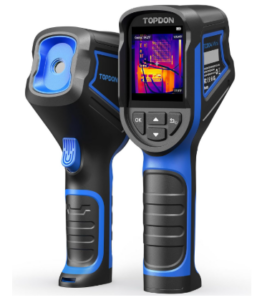
1)TOPDON TC004 Mini Thermal Imaging Camera
2)HF96 Thermal Camera with Laser Pointer
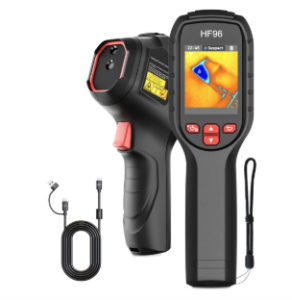
The HF96 Thermal Camera with Laser Pointer positions itself as one of the best thermal cameras under 200 by combining intelligent detection, enhanced imaging, and strong durability in a compact design. It is aimed at homeowners, technicians, and field users who want fast diagnostics with minimal complexity.
The device introduces intelligent scene recognition through its IntellFault system, which improves inspection speed in practical environments. It detects issues such as water leaks and insulation gaps with the help of deep learning analysis. Additionally, users can update firmware to unlock full functionality and switch to scene mode for optimized detection. While it does not provide moisture readings, it still delivers useful visual identification for common household and electrical faults.
Image clarity benefits from live super resolution enhancement. The camera starts with a 96 x 96 infrared resolution and upgrades visuals to 240 x 240 in real time. As a result, thermal details appear sharper during both live viewing and image capture. Moreover, a thermal sensitivity below 50 mK helps reveal subtle temperature differences, while the 25 Hz refresh rate keeps the display smooth during scanning.
Measurement performance remains accurate across a wide range. The device measures from -4°F to 1022°F with approximately ±3.6°F accuracy for typical home and maintenance tasks. Furthermore, it allows adjustments for emissivity and distance, which improves accuracy when working with materials such as brick, cement, and metal surfaces. This flexibility makes it suitable for varied inspection environments.
Usability is enhanced through a combination of practical controls and tools. A built in laser pointer helps target objects in low light conditions, while multiple color palettes support different viewing preferences. Additionally, PC software expands functionality with image analysis, real time monitoring, and 3D visualization. A tripod mount adds stability for longer inspection sessions, which improves workflow efficiency.
Durability supports demanding field use. The camera offers up to 11 hours of runtime and includes 4 GB of storage capable of holding thousands of images and video recordings. Moreover, it withstands drops from up to 6.6 feet and carries an IP54 rating for dust and splash resistance, which increases reliability in tough environments.
Pros
- Strong image enhancement from 96 x 96 to 240 x 240 resolution
- Intelligent fault detection improves inspection speed
- Wide temperature range with good accuracy
- Long battery life up to 11 hours
- Large internal storage capacity
- Durable build with drop resistance and IP54 protection
- Useful PC software and tripod support
Cons
- Base resolution is low without enhancement
3)FOXWELL RT280 Thermal Imaging Camera
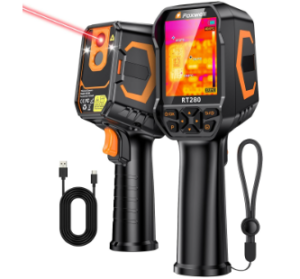
The FOXWELL RT280 Thermal Imaging Camera is one of the strongest contenders among the best thermal cameras under 200, especially for users who need detailed imaging, reliable diagnostics, and advanced analysis tools in a compact handheld device. It is designed for electricians, HVAC technicians, mechanics, and homeowners who want professional-level thermal insight without complex equipment.
The device delivers enhanced thermal clarity through a 2.8 inch 320 x 240 LCD screen that presents smooth and detailed visuals during inspections. In addition, TISR technology improves effective resolution from 120 x 90 up to 240 x 180, allowing users to detect small temperature differences that might otherwise go unnoticed. With a wide 50° x 38° field of view and a 25Hz refresh rate, the camera maintains steady and clear imaging even when scanning larger surfaces or moving across systems.
PC analysis significantly expands its usefulness beyond handheld viewing. After transferring images to a Windows computer, users can perform point, line, and area temperature analysis. Furthermore, the software supports 2D and 3D thermal visualization, which makes complex heat patterns easier to interpret. Automated report generation also helps professionals document findings in a structured and shareable format, improving workflow efficiency during inspections and maintenance tasks.
Storage capacity is another strong advantage. The device includes 8GB of eMMC storage capable of holding more than 20,000 images and videos. As a result, users can document extensive inspections without worrying about running out of space. This makes it especially useful for long-term projects involving electrical systems, HVAC maintenance, or machinery diagnostics where visual records are essential.
Temperature measurement is both wide-ranging and precise. The camera operates from –4°F to 1022°F with an accuracy of ±3.6°F or ±2 percent. It automatically identifies hot, cold, and central points on the screen, while high and low temperature alarms provide immediate alerts when abnormalities appear. Consequently, users can respond quickly to overheating, insulation issues, or mechanical faults, improving both safety and efficiency.
Usability is further improved through multiple viewing and targeting tools. Nine color palettes help highlight temperature differences in different environments, while the built-in laser pointer and LED light assist with accurate targeting in dark or confined spaces. Additionally, the ergonomic design ensures comfortable handling during extended use, even in challenging work conditions.
Durability completes the package. The camera is built to withstand drops from up to 6.6 feet and carries an IP54 rating for resistance against dust and water splashes. Combined with its lightweight structure, it remains highly portable and dependable for fieldwork, whether indoors or outdoors.
Pros
- High resolution enhanced imaging up to 240 x 180
- Large LCD screen with smooth 25Hz refresh rate
- Strong PC software with 2D and 3D analysis tools
- Massive storage capacity for long inspections
- Wide temperature range with good accuracy
- Multiple color palettes plus laser and LED support
- Durable build with drop and IP54 resistance
Cons
- PC software only compatible with Windows
4)TOPDON TC001 Thermal Camera
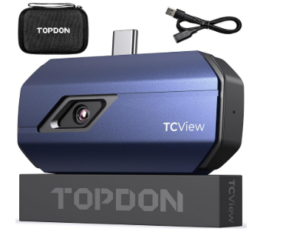
The TOPDON TC001 Thermal Camera is one of the best thermal cameras under 200 for users who want high resolution performance in a compact, phone powered device. It is designed for technicians, inspectors, and DIY users who prefer mobility and advanced imaging without carrying bulky equipment.
This thermal imager begins with a 256 x 192 infrared resolution and enhances it to 512 x 384 using TISR technology. As a result, thermal images appear significantly sharper and more detailed when connected to compatible Android devices. It also consumes only 0.35W of power, which means it relies on your smartphone or tablet battery and can operate for around 4 to 7 hours depending on battery size. This efficiency makes it practical for long inspections in the field.
Temperature measurement performance is highly precise. The device operates within a range of -4°F to 1022°F and provides accuracy within ±3.6°F or 2 percent. It can even measure small variations down to 0.1°C. Additionally, it supports continuous monitoring and generates waveform graphs that display high, low, and average temperature readings, which helps users analyze thermal behavior over time.
Flexibility in analysis is another strong point. The app allows users to select point, line, and surface measurements, with up to three areas per mode. Consequently, multiple zones can be monitored at the same time, which is useful for electrical panels, HVAC systems, or building inspections. Nine color palettes further improve visibility by highlighting subtle temperature differences in different environments.
Image processing tools enhance usability in real-world conditions. The camera includes image enhancement features that improve sharpness and contrast, making thermal patterns easier to interpret. In addition, image fusion combines infrared and visible light images for better context. Rotation functionality also allows users to view thermal data from different angles without physically moving the phone, which improves workflow efficiency.
Portability is one of its most practical advantages. Weighing only about 30 grams and measuring 2.8 x 1.65 x 0.55 inches, the device is extremely lightweight and easy to carry. It connects through OTG-enabled Android devices and comes with a 19.7 inch cable for flexible positioning. Moreover, the included EVA protective bag and cleaning cloth help maintain durability and cleanliness during field use.
Pros
- Very high resolution enhancement up to 512 x 384
- Extremely low power consumption for longer phone battery use
- Accurate temperature measurement with fine detail capability
- Multiple measurement modes with simultaneous area tracking
- Image fusion and enhancement improve clarity
- Ultra compact and lightweight design
- Wide compatibility with Android devices and tablets
Cons
- Not compatible with iOS devices including iPhone 15
5)AccuMEMS GT14S Thermal Imaging Camera
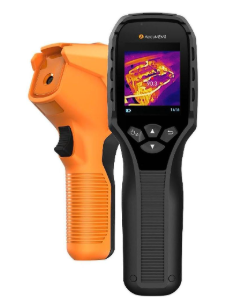
The AccuMEMS GT14S Thermal Imaging Camera stands out as one of the best thermal cameras under 200 for users who want a lightweight, long-lasting, and highly practical inspection tool. It is designed for HVAC technicians, electricians, automotive users, and homeowners who need reliable temperature diagnostics in both routine and demanding environments.
This device combines dual mode diagnosis that allows users to switch between full thermal imaging and thermometer mode. With thermal imaging, it continuously tracks hot, cold, and center spots across moving objects such as machinery, animals, or HVAC systems. In contrast, thermometer mode provides quick point and shoot readings with a clear digital display, which is especially useful when exact temperature values are needed in kitchens or targeted inspection points.
Operation is designed to be simple and intuitive. Weighing only 240 grams, the camera remains comfortable during long inspections or extended fieldwork. In addition, the non slip grip improves handling stability. The interface uses straightforward button controls that allow easy access to power, menu navigation, image capture, and palette switching. With seven color palettes available, users can adapt the display to different environments and improve visibility of temperature variations.
Performance accuracy is strengthened by high precision sensors with NETD below 50mK. As a result, the device can detect extremely small temperature differences as low as 0.05°C. It operates across a wide range from -4°F to 1022°F, making it suitable for everything from home insulation checks to high temperature automotive diagnostics. Moreover, adjustable emissivity and distance settings improve accuracy when working with different materials such as cement, ceramics, and metal surfaces.
Detection efficiency is further improved through a wide 50 degree field of view that allows faster scanning of larger areas. At the same time, customizable high and low temperature alarms notify users instantly when abnormal readings occur. Level and span adjustments help isolate problem zones such as insulation gaps, overheating components, or heat loss in flooring systems.
Battery life supports extended field use without interruption. The built in 2500mAh rechargeable battery delivers up to 14 hours of continuous operation, making it suitable for full day inspections. Combined with its compact build and durable design, the camera remains dependable across various working conditions and environments.
Pros
- Lightweight 240 gram design for easy handling
- Dual mode operation for both thermal imaging and thermometer readings
- High sensitivity sensors detect very small temperature differences
- Wide temperature range suitable for multiple applications
- Long battery life up to 14 hours
- Customizable alerts improve fault detection efficiency
- Simple controls with multiple color palette options
Cons
- No advanced PC or software analysis tools
6)AMPBANK M256 Thermal Camera
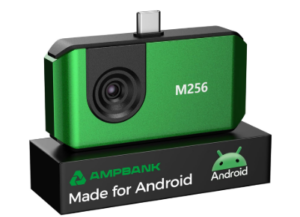
The AMPBANK M256 Thermal Camera is a compact yet powerful option among the best thermal cameras under 200, designed for users who need high resolution imaging, flexible analysis tools, and true portability. It is especially useful for home inspectors, technicians, and DIY users who want advanced thermal insights directly from their smartphone or PC.
This device delivers strong imaging performance through a 256 x 192 infrared sensor that produces sharp thermal visuals while consuming only 0.35W of power. As a result, it can operate efficiently when connected to Android smartphones or tablets, offering around 4 to 7 hours of usage depending on battery capacity. In addition, TISR technology enhances output to 512 x 384 resolution, which significantly improves clarity and helps reveal fine temperature variations during inspections.
Advanced analysis tools improve diagnostic accuracy. The camera supports 3D thermal analysis, allowing users to examine temperature patterns from different angles for better interpretation of faults or irregularities. Moreover, Dot, Line, and Plane measurement modes provide flexible temperature tracking across specific points or larger surface areas. With 10 color palettes available, users can easily highlight temperature differences in various environments for clearer visualization.
Portability is another major advantage. Weighing only 30 grams and measuring 2.8 x 1.65 x 0.55 inches, the device is extremely lightweight and easy to carry. It connects directly to OTG-enabled Android devices, making it ready for instant use without complicated setup. Furthermore, the included 19.7 inch USB extension cable improves handling flexibility, especially in tight or hard to reach inspection areas.
Durability and convenience are also well considered. The camera comes with an EVA anti dust bag and cleaning cloth, helping protect it during transport and storage. Because of its small size and simple plug and play operation, it is suitable for both professionals in the field and homeowners who need occasional thermal checks.
Pros
- High resolution enhancement up to 512 x 384 for detailed imaging
- Very low power consumption for extended smartphone use
- 3D thermal analysis improves inspection accuracy
- Multiple measurement modes for flexible diagnostics
- Wide range of 10 color palettes for better visualization
- Ultra lightweight and highly portable design
- Simple plug and play connection with Android devices and PC
Cons
- Requires OTG compatible Android device for use
7)Thermal Master P1 – Thermal Camera
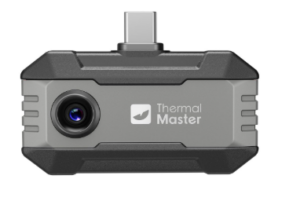
The Thermal Master P1 Thermal Camera is one of the best thermal cameras under 200 for users who want a highly accurate, mobile-friendly, and versatile inspection tool. It is designed for technicians, homeowners, and field professionals who need fast thermal insights directly from their phone, tablet, or Windows device.
This thermal imager delivers strong imaging performance through a native 160 x 120 infrared sensor that is enhanced to 320 x 240 resolution using Thermal Master X³ algorithms. As a result, thermal details appear sharper and easier to interpret in real time. In addition, its 0.04°C thermal sensitivity and 25Hz refresh rate allow it to detect even small temperature changes smoothly while maintaining stable live imaging during movement.
Device compatibility is highly flexible. It works with USB C Android phones, USB C iPhones, Android tablets, and Windows systems. Furthermore, the extended Type C connector adds extra clearance so most phone cases do not need to be removed. A 19 inch extension cable is also included, which improves reach when inspecting tight or difficult spaces such as behind panels or inside machinery.
Temperature measurement capability is wide and precise. The camera operates within a range of -4°F to 1112°F with ±3.6°F accuracy. Additionally, adjustable temperature span helps filter background heat, making it easier to isolate electrical faults, HVAC inefficiencies, moisture issues, or overheating components. Built in calibration also helps maintain consistent readings during longer inspection sessions.
Visualization tools improve inspection efficiency. A 1x to 15x zoom function allows users to focus on small components, while a 52° x 39° field of view supports wide area scanning. Moreover, features such as spot tracking, high and low temperature alarms, and picture in picture mode help users identify and document issues quickly. Seven color palettes and instant photo or video capture further enhance usability in different environments.
Power efficiency is another practical strength. The device draws power directly from the connected device, eliminating the need for separate charging or batteries. With only 0.32W consumption, it can run for approximately 5 to 8 hours depending on the host device. This makes it suitable for continuous field use without interruption.
Durability supports demanding working conditions. The camera includes IP54 protection against dust and water splashes and can withstand drops of up to 1 meter. It also comes with a protective carrying case, which improves portability and safeguards the device during transport.
Pros
- High resolution enhancement up to 320 x 240 for clear imaging
- Very wide temperature range suitable for multiple applications
- Strong compatibility with Android, iOS USB C devices, and Windows
- Power efficient design with no battery required
- Useful zoom and wide field of view for flexible inspection
- Accurate temperature detection with good sensitivity
Durable build with IP54 protection and drop resistance
Cons
- Requires connected device to operate at all times
8)MILESEEY TR10 Thermal Imaging Camera
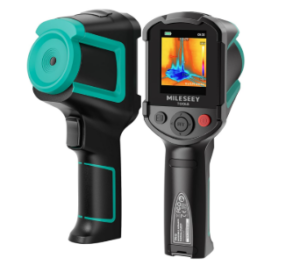
The MILESEEY TR10 Thermal Imaging Camera is a strong contender among the best thermal cameras under 200, offering a balance of clarity, accuracy, and durability for users who need dependable thermal diagnostics in the field. It is designed for electricians, HVAC technicians, and home inspectors who want clear thermal insight without complicated equipment.
This thermal imager provides enhanced 192 x 192 infrared resolution combined with a 25Hz refresh rate, which results in smooth real time imaging and improved detail recognition during scans. As a result, users can track temperature changes more easily while inspecting electrical systems, machinery, or building structures. The high refresh rate also ensures that moving heat patterns remain stable and easy to interpret.
Temperature accuracy is another strong advantage. The device operates within a range of -4°F to 1022°F and maintains ±2°C accuracy with high thermal sensitivity below NETD 50mK. In addition, it automatically identifies and displays the maximum, minimum, and center point temperatures within a scanned area. This helps users quickly locate hot spots, cold spots, and irregular thermal patterns without manual calculations.
Detection efficiency is improved through smart alert functions. High and low temperature alarms notify users when readings exceed preset thresholds, which helps identify overheating components or abnormal structural conditions early. Furthermore, adjustable emissivity settings allow the camera to adapt to different materials such as metal, wood, or concrete, improving measurement accuracy across various inspection environments.
Durability supports long term field use. The device has been tested for drops up to 6.6 feet and includes recessed lens protection, which helps prevent damage during handling. In addition, the 3000mAh battery provides up to 8 hours of continuous operation, making it suitable for extended inspection sessions. Built in 8GB storage also allows users to save more than 30,000 images, ensuring that documentation is not limited during large projects.
Pros
- Clear 192 x 192 thermal resolution with smooth 25Hz refresh rate
- High temperature accuracy with NETD below 50mK
- Automatic detection of max, min, and center temperatures
- Adjustable emissivity improves accuracy on different materials
- Long battery life up to 8 hours
- Large internal storage for extensive image recording
- Durable build with drop resistance and lens protection
Cons
- No wireless or smartphone connectivity options
You may also like to read:6 Best Night Vision Goggles under $200
Advantages of Using Thermal Cameras under 200
Affordable access to thermal imaging technology
Thermal cameras in this category make infrared inspection tools accessible to a wide range of users. Instead of investing in expensive industrial equipment, users can perform essential diagnostics at a much lower cost. This affordability allows homeowners, technicians, and DIY users to benefit from thermal imaging without financial strain while still getting practical functionality for everyday tasks.
Portable design for field convenience
Most thermal cameras under 200 are designed with compact and lightweight builds. This makes them easy to carry during inspections and comfortable to use for extended periods. Their small size also allows quick storage in toolkits or bags, which improves convenience for on the go troubleshooting in homes, workshops, or outdoor environments.
Practical image clarity for real world use
Although these devices are budget friendly, they still provide usable thermal clarity for most inspection needs. Many models use image enhancement techniques to improve detail visibility. This helps users identify heat loss, electrical faults, and mechanical issues effectively, even if the resolution is not at professional industrial level.
Faster problem detection and diagnostics
Built in features such as hot spot tracking, cold spot detection, and temperature alerts help users quickly identify issues. Instead of manually scanning surfaces, the camera highlights anomalies automatically. This reduces inspection time and improves efficiency during maintenance and troubleshooting work.
Energy efficiency and flexible power options
Many models in this price range are optimized for low power consumption or rely on smartphone power. This allows longer operating time without frequent charging interruptions. It also makes them practical for extended fieldwork where access to power sources may be limited.
Versatility across multiple applications
Thermal cameras under 200 can be used in a wide range of situations such as HVAC inspection, electrical diagnostics, plumbing checks, and home energy audits. Their adaptability makes them useful for both professional and personal applications, increasing their overall value.
Factors to Consider When Choosing the Best Thermal Cameras under 200
Thermal resolution and image quality
Thermal resolution determines how detailed the temperature image appears. Higher clarity helps in identifying small temperature variations more effectively. Many devices also use enhancement technology to improve visual detail, making it important to consider both native and processed resolution.
Temperature range and measurement accuracy
A wide temperature range allows the device to handle both low and high heat environments. Accuracy is equally important because even small errors can affect diagnostic results. Reliable sensors and calibration features improve measurement confidence in real world conditions.
Refresh rate for smooth imaging
The refresh rate affects how smoothly thermal images update on screen. A higher refresh rate improves real time monitoring, especially when scanning moving machinery or changing heat patterns. This helps users track issues without lag or distortion.
Portability and ergonomic design
Lightweight and compact designs improve ease of use during inspections. A comfortable grip and balanced structure reduce hand fatigue, especially during long sessions. Portability also makes the device easier to carry between job sites.
Battery performance and power efficiency
Battery life or power efficiency determines how long the device can operate continuously. Longer runtime is useful for extended inspections, while smartphone powered models benefit from reduced energy consumption. This factor is important for uninterrupted field use.
Software and analysis capabilities
Advanced software features improve how thermal data is interpreted. Functions such as temperature graphs, image fusion, and report generation help users analyze results more effectively. These tools are especially useful for professional documentation and detailed troubleshooting.
Durability and environmental resistance
Durability ensures the camera can withstand harsh working conditions. Resistance to drops, dust, and moisture improves reliability during field use. A rugged build helps protect the device from accidental damage in demanding environments.
Compatibility and connectivity options
Compatibility determines how easily the camera connects to smartphones, tablets, or computers. Strong connectivity options improve workflow efficiency by allowing quick data transfer, storage, and analysis. This is important for users who need seamless integration with different devices.
FAQs
Can thermal cameras under 200 detect hidden problems in walls
They cannot see through walls, but they can detect surface temperature differences that may indicate hidden issues such as insulation gaps, moisture buildup, or electrical faults behind surfaces.
Are budget thermal cameras suitable for professional work
Yes, they are suitable for many professional applications like HVAC inspection and electrical troubleshooting. However, they are best used for general diagnostics rather than highly specialized industrial analysis.
What is the biggest limitation of low cost thermal cameras
The main limitation is reduced native resolution compared to premium models. While image enhancement helps improve clarity, they may not provide the fine detail required for advanced scientific or industrial precision work.
Conclusion
The best thermal cameras under 200 prove that you do not need to spend a fortune to access reliable and effective thermal imaging technology. Across all the options I have covered, a clear pattern emerges: these devices consistently deliver enhanced resolution, accurate temperature measurement, long battery life, and durable builds suited for real-world use. Compact smartphone-powered models and powerful standalone handheld units both cover virtually every use case and preference. Whether you prioritize portability, imaging clarity, software analysis, or rugged durability, this price range has far more to offer than most people expect. Investing in one of these cameras means faster diagnostics, smarter maintenance, and greater peace of mind, all without straining your budget.