
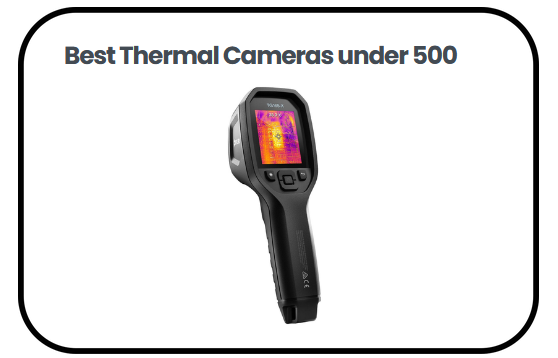
When I started exploring thermal cameras under 500, I was genuinely surprised by how much capability this price range now offers. Whether you are an HVAC technician, electrician, building inspector, or a serious DIY enthusiast, these affordable thermal cameras deliver real diagnostic power without draining your budget. What makes them truly impressive is the combination of enhanced resolution technologies, dual imaging systems, rugged field-ready designs, and smart connectivity features that were once reserved for far more expensive professional equipment.
In this guide, I will walk you through the standout features that matter most, my top picks, a practical buying guide to help you choose the right camera for your needs, and answers to the most frequently asked questions.
Here is a summary of the Best Thermal Cameras under 500:
- FLIR TG165-X Thermal Imaging Camera with Bullseye Laser — Best Overall
- TOPDON TC005 3.5″ Dual-Lens Thermal Imaging Camera — Best for Professional Inspections
- Thermal Master Handheld Thermal Camera — Best for Advanced Features
- FOXWELL RT280 PRO Thermal Camera — Best for Data Analysis & Reporting
- HSFTOOLS P2W Wi-Fi Thermal Camera — Best for Smart Detection & Connectivity
- Klein Tools TI250 Rechargeable Thermal Imaging Camera — Best for Electricians
- testo 860i Wireless Thermal Imaging Camera — Best for Portability & Mobile Integration
Best Thermal Cameras under 500
1)FLIR TG165-X Thermal Imaging Camera with Bullseye Laser
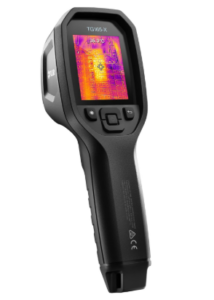
The FLIR TG165-X Thermal Imaging Camera is a practical and reliable option among the best thermal cameras under 500, designed for professionals and serious DIY users handling building inspections, HVAC diagnostics and electrical troubleshooting. It combines simplicity with effective thermal detection, making it especially useful for identifying heat patterns without the complexity of high-end systems.
One of the most useful aspects of this camera is its 4,800-pixel infrared sensor, which captures temperature ranges from -25°C to 300°C. This range is well suited for most real-world applications, from detecting heat loss in buildings to spotting overheating electrical components. The resolution may not match premium models, but it delivers enough clarity to make accurate assessments in everyday inspection tasks.
The image quality is enhanced by FLIR’s MSX technology, which overlays visual details onto thermal images. This results in clearer outlines of objects, making it easier to interpret what you are seeing without needing a separate visual camera reference. This approach improves usability, especially for users who want quick insights without post-processing images.
The built-in bullseye laser pointer helps indicate the approximate measurement area. This makes it easier to target specific spots when scanning surfaces, reducing guesswork and speeding up inspections. It is particularly helpful when working in environments with multiple heat sources or when precision matters.
Durability is another strong point. The device features a rugged design with an IP54 rating, offering protection against dust, dirt, and light splashes. It is also drop-tested, making it suitable for use in demanding environments such as construction sites or mechanical rooms where tools are exposed to rough handling.
FLIR backs the TG165-X with a solid warranty package, offering two years of coverage for parts and labor and ten years for the detector. This extended protection adds confidence in long-term use, especially since the detector is the most critical component in a thermal camera.
Pros
- Clear thermal images enhanced with MSX for better detail recognition
- Wide temperature range suitable for HVAC, electrical, and building inspections
- Bullseye laser improves targeting accuracy during scans
- Durable construction with IP54 protection and drop-tested design
- Strong warranty coverage including long-term detector protection
- Easy to use for both professionals and beginners
Cons
- Lower resolution compared to higher-end thermal cameras
2)TOPDON TC005 3.5″ Dual-Lens Thermal Imaging Camera
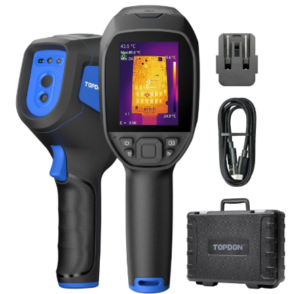
The TOPDON TC005 3.5″ Dual-Lens Thermal Imaging Camera is a capable and well-rounded option among the best thermal cameras under 500, offering a combination of thermal accuracy, visual clarity, and practical field features. It is designed for professionals handling inspections in HVAC, electrical systems, and building diagnostics, while still remaining accessible to advanced DIY users.
This camera combines a 256×192 infrared sensor enhanced to 512×384 resolution with a built-in 2 megapixel visible light camera. This dual lens setup allows users to view thermal data alongside real-world imagery, making it easier to understand exactly where issues are located. The added visual context improves accuracy during inspections, especially when dealing with complex systems or crowded environments.
Precision is improved with the integrated laser targeting system, which measures distance up to 4 meters. This feature helps users maintain consistent measurement points and improves confidence when scanning specific areas. It reduces guesswork and allows for more reliable diagnostics without needing additional tools.
The 3.5 inch display offers a clear and comfortable viewing experience, making it easier to analyze thermal images directly on the device. A larger screen reduces eye strain and allows users to verify findings immediately, which is particularly useful during extended inspection sessions.
Storage and documentation capabilities are another strength. With 64 GB of internal storage, the TC005 supports extensive image capture, allowing users to keep detailed records of inspections. This is valuable for professionals who need to maintain organized documentation for reporting or future reference.
Connectivity options further enhance usability. The device supports wireless connection to the TopInfrared mobile app and USB connection to TopView PC software. These tools enable image transfer, deeper analysis, and the creation of professional reports, making the camera suitable for structured workflows.
Durability and battery performance make it reliable in the field. The camera runs for up to 8 hours on a full charge and recharges in about 2 hours, helping reduce downtime. Its IP54 rated housing, resistance to drops up to 2 meters, and built in LED light ensure it performs well in demanding environments. The included carrying case adds an extra layer of protection during transport.
Pros
- Dual lens system provides both thermal and visual context for better diagnostics
- Enhanced resolution improves clarity for identifying problem areas
- Laser targeting with distance measurement increases accuracy
- Large display makes on device analysis easier and more comfortable
- Generous 64 GB storage supports detailed inspection records
- Wireless and USB connectivity for reporting and analysis tools
- Long battery life with fast recharge time
- Rugged design suitable for professional environments
Cons
- Bulkier than compact entry level thermal cameras
3)Thermal Master Handheld Thermal Camera
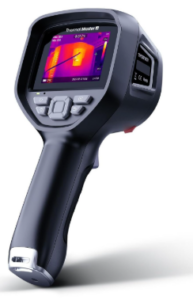
The Thermal Master Handheld Thermal Camera Thor 002 is a feature-rich option among the best thermal cameras under 500, offering a strong mix of resolution, performance, and practical tools for professional inspections. It is well suited for applications such as electrical diagnostics, HVAC troubleshooting, and building maintenance, while also appealing to advanced users who want detailed thermal analysis.
This camera delivers enhanced imaging through X³ IR technology, which boosts the native 256×192 thermal resolution to 512×384. Combined with a 2 megapixel visual camera and a 3.5 inch 640×480 IPS display, users get clear and detailed thermal images with added visual context. The 25Hz refresh rate ensures smooth image updates, while the 40mK thermal sensitivity allows detection of subtle temperature differences, making it easier to identify hidden issues.
Temperature measurement capabilities are another strong area. The device covers a wide range from -4℉ to 1022℉ with an accuracy of ±3.6℉. It also allows emissivity adjustments for different materials, which improves measurement reliability. Users can monitor up to six points at once, including center, hottest, coldest, and three customizable points, providing a more complete picture during inspections.
Connectivity and data handling are designed for efficiency. The camera supports USB connection for real-time analysis on a computer and WiFi pairing with smartphones and tablets for flexible operation. With 8GB RAM and 32GB storage, it can handle image capture, video recording, and data storage with ease. Features like voice notes and QR code file management simplify documentation and reporting, making it suitable for professional workflows.
Battery performance is impressive, with a 5000mAh battery that delivers up to 10.5 hours of operation. Fast charging support helps reduce downtime between uses. The built-in laser pointer assists with accurate targeting, while high and low temperature alarms provide additional safety during inspections. Its rugged construction, IP54 protection rating, and ability to withstand drops up to 2 meters make it reliable in demanding environments.
The camera is also versatile in the field. Its 4.3mm lens increases detection range, while 4X digital zoom allows closer inspection of specific areas. Whether scanning large spaces or focusing on detailed components, it adapts well to different inspection needs. Support for both photo and video recording ensures comprehensive documentation on site.
Pros
- Enhanced thermal resolution delivers clear and detailed imaging
- High sensitivity detects subtle temperature differences effectively
- Wide temperature range with adjustable emissivity for accurate readings
- Multi point measurement provides more detailed diagnostics
- Strong battery life with fast charging support
- Wireless and USB connectivity for flexible analysis and reporting
- Large IPS display improves viewing and interpretation
- Durable design suitable for professional use
Cons
- Interface may require time to fully learn for new users
4)FOXWELL RT280 PRO Thermal Camera
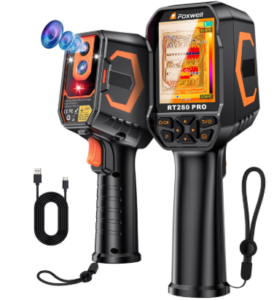
The FOXWELL RT280 PRO Thermal Camera is a versatile and capable device among the best thermal cameras under 500, built for users who need both reliable thermal detection and practical inspection tools. It combines dual camera functionality, enhanced resolution, and strong analysis features, making it suitable for home inspections, electrical diagnostics, HVAC work, and mechanical troubleshooting.
This camera features a dual lens system that pairs an infrared sensor with a 2 megapixel visual camera. It supports five imaging modes including thermal, visible, outline fusion, picture in picture, and overlay fusion. These options make it easier to match heat patterns with real world objects, helping users quickly identify problem areas and understand what they are seeing during inspections.
Thermal clarity is improved through TISR technology, which enhances the base 256×192 resolution to 512×384. The 2.8 inch LCD screen provides clear visuals, while the 25Hz refresh rate ensures smooth image updates. With a 56° by 42° field of view, the camera captures a broad area, making it effective for scanning larger spaces without constant repositioning.
The RT280 PRO also supports detailed analysis through PC software. Users can transfer images to a Windows computer for advanced evaluation, including point, line, and area temperature analysis along with 2D and 3D thermal imaging. The ability to generate reports directly from the software makes it a strong option for professionals who need structured documentation and actionable insights.
Storage is another advantage, with 32GB of built in eMMC memory capable of holding over 80,000 images and videos. This allows users to document inspections extensively without worrying about running out of space, keeping records organized and accessible for future reference.
Temperature measurement is accurate and reliable, covering a range from –4°F to 1022°F with ±3.6°F or ±2 percent accuracy. The camera automatically detects the highest, lowest, and center temperatures, while high and low alerts notify users of unusual conditions. These features help improve safety and efficiency when dealing with overheating systems or insulation issues.
Additional tools such as nine color palettes, a laser pointer, and a built in LED light enhance usability in different environments. These features make it easier to visualize temperature differences and work in low light or confined spaces.
The design is rugged and portable, with IP54 protection against dust and water and the ability to withstand drops from up to 6.6 feet. Its lightweight and ergonomic build ensures comfortable handling during extended use, making it reliable for demanding field conditions.
Pros
- Dual lens system with multiple imaging modes for better diagnostics
- Enhanced resolution delivers clearer thermal images
- Wide field of view suitable for scanning large areas
- Advanced PC analysis with 2D and 3D thermal insights
- Large storage capacity supports extensive documentation
- Accurate temperature readings with automatic detection and alerts
- Multiple color palettes improve visualization
- Durable and portable design for field use
Cons
- PC software not compatible with Mac systems
5)HSFTOOLS P2W Wi-Fi Thermal Camera
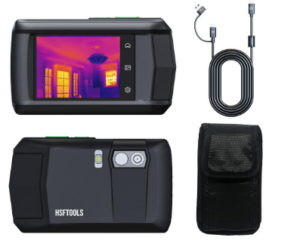
The HSFTOOLS P2W Wi-Fi Thermal Camera is a modern and intelligent option among the best thermal cameras under 500, combining enhanced imaging, smart detection features, and strong connectivity tools. It is designed for both professionals and advanced home users who want faster diagnostics and more detailed thermal analysis across a variety of applications.
This camera delivers improved image clarity through its Live Super Resolution algorithm, which enhances the native 256×192 infrared resolution to 640×480. The result is smoother and more detailed thermal visuals, displayed on a 3.5 inch 640×480 touchscreen. With a 25Hz refresh rate and thermal sensitivity below 40mK, it captures subtle temperature differences clearly, making it suitable for identifying hidden issues such as insulation gaps or moisture buildup.
One of its most useful capabilities is intelligent scene detection. Using advanced algorithms, the system can automatically identify potential problems like water leaks and insulation voids. It analyzes environmental data and provides alerts when irregular conditions are detected, helping users act quickly without needing deep technical expertise. This makes the device especially helpful for beginners while still offering value to experienced inspectors.
The dual camera system includes both infrared and an 8 megapixel visual camera, allowing users to switch between multiple viewing modes such as thermal, visual, fusion, picture in picture, and blending. These modes make it easier to interpret thermal data alongside real world details. The touchscreen interface is designed for ease of use, allowing quick adjustments and smooth navigation.
Connectivity is another strong area. The camera supports WiFi pairing with the HSFTOOLS mobile app, enabling easy image sharing, analysis, and reporting directly from a smartphone or tablet. For deeper analysis, the HSF Studio PC software offers features like screen projection, real time monitoring, and 3D plotting, supporting more advanced inspection workflows.
The device also supports video and audio recording, making it suitable for detailed documentation. With 16GB of internal storage, it can store thousands of images and extended video recordings. This ensures users can keep a complete record of inspections without needing external storage solutions.
Temperature measurement is reliable, with a range from -4℉ to 752℉ and accuracy within ±3.6°F or ±2 percent. It automatically tracks the hottest, coldest, and center points, while customizable alerts notify users of abnormal temperature changes. Adjustable emissivity settings further improve accuracy across different materials.
In terms of build quality, the P2W is designed for portability and durability. It features IP54 protection and can withstand drops from up to 6.6 feet. The compact design, built in LED flashlight, and tripod mount add convenience for fieldwork. Battery life reaches up to 4 hours, with power saving options available to extend usage during longer tasks.
Pros
- Enhanced resolution provides detailed and smooth thermal images
- Intelligent detection helps identify issues like leaks and insulation gaps quickly
- Dual camera system with multiple viewing modes improves usability
- Touchscreen interface makes operation simple and intuitive
- WiFi connectivity supports easy sharing and mobile analysis
- Supports video and audio recording for complete documentation
- Accurate temperature tracking with customizable alerts
- Durable design with drop resistance and environmental protection
Cons
- Shorter battery life compared to some competing models
6)Klein Tools TI250 Rechargeable Thermal Imaging Camera
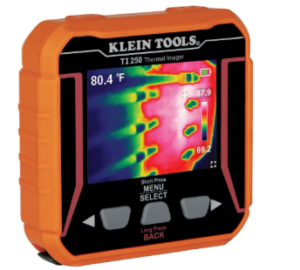
The Klein Tools TI250 Rechargeable Thermal Imaging Camera is a compact and dependable choice among the best thermal cameras under 500, built for electricians, HVAC technicians, and maintenance professionals who need fast and accurate thermal diagnostics. It focuses on simplicity, durability, and practical measurement features that support everyday troubleshooting tasks.
This thermal imager offers over 19,200 pixels of resolution, allowing users to clearly identify hot and cold spots during inspections. While it is not designed for ultra high detail imaging, it provides sufficient clarity for detecting electrical faults, insulation issues, and mechanical overheating. The camera is optimized for quick scanning and straightforward interpretation of thermal data, making it effective in field environments where speed matters.
Temperature accuracy is improved through adjustable emissivity settings ranging from 0.01 to 0.99. This flexibility allows users to fine tune readings based on different surface materials such as metal, wood, or drywall. It helps ensure more reliable measurements across a wide range of applications, reducing errors caused by varying surface conditions.
The device also includes user selectable temperature alarms, which can be set between -4°F and 752°F. These alerts help users quickly identify abnormal temperature conditions without needing constant manual monitoring. Combined with automatic detection of high and low temperature points, it streamlines the inspection process and improves efficiency during troubleshooting.
Image usability is enhanced through multiple color palette options, allowing users to highlight temperature differences more clearly depending on the environment. This makes it easier to interpret thermal patterns and identify potential problem areas during inspections.
For storage and sharing, the camera supports USB C connectivity, allowing users to save and transfer images easily for reporting or documentation. This makes it convenient for professionals who need to maintain records or share findings with clients or team members.
The rechargeable lithium ion battery ensures consistent operation without the need for disposable batteries. It supports continuous use during inspections, while the included carrying case and accessories make it a complete and portable solution for fieldwork.
Pros
- High resolution 19200 pixel thermal imaging for clear hotspot detection
- Adjustable emissivity improves measurement accuracy across materials
- User selectable temperature alarms enhance safety and monitoring
- Multiple color palettes improve thermal image interpretation
- USB C connectivity allows easy image storage and sharing
- Rechargeable battery supports continuous field use
- Lightweight and portable with complete accessory package
Cons
- Lower resolution compared to advanced dual lens thermal cameras
7)testo 860i Wireless Thermal Imaging Camera
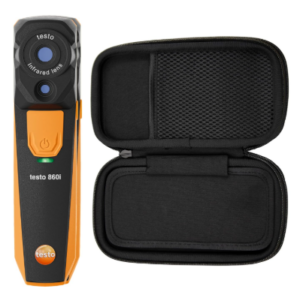
The testo 860i Wireless Thermal Imaging Camera is a compact and highly practical option among the best thermal cameras under 500, especially for users who value mobility and smartphone integration. Designed for HVAC technicians, electricians, and field inspectors, it focuses on fast diagnostics, wireless operation, and reliable thermal accuracy in everyday professional environments.
This thermal imager uses a 256 x 192 infrared sensor with 49,152 pixels, delivering sharp and detailed thermal images suitable for precise temperature analysis. While it remains compact, it still provides enough clarity for identifying leaks, electrical faults, and insulation issues. The radiometric imaging capability ensures that each pixel carries temperature data, allowing for more accurate interpretation of thermal patterns.
One of its most practical advantages is advanced temperature analysis through the Testo Smart App. The system supports DeltaT, DeltaHeat, and DeltaCool functions, giving users deeper insight into temperature differences and anomalies. This makes it easier to evaluate problem areas quickly and supports more informed decision making during inspections.
Wireless connectivity is a key part of the experience. The device connects via Bluetooth and WiFi to iOS and Android smartphones, allowing users to capture, view, and analyze thermal images directly on their mobile devices. The ability to clip the camera onto a phone or tablet also improves convenience, enabling one handed or integrated operation during fieldwork.
The compact design enhances portability without sacrificing durability. With IP54 protection and drop resistance up to 5 feet, it is built to handle typical job site conditions. Its lightweight form factor makes it especially useful for technicians who need to move frequently between inspection points or work in tight spaces.
The complete package includes the thermal camera, a carrying pouch for protection, and a USB C cable for charging and connectivity. This ensures users can start using the device immediately without needing additional accessories.
Pros
- Wireless Bluetooth and WiFi connectivity for mobile based inspections
- Sharp 256 x 192 infrared resolution with full radiometric data
- Advanced temperature analysis tools for deeper diagnostics
- Compact and clip on design for easy smartphone integration
- Durable build with IP54 protection and drop resistance
- Lightweight and highly portable for field use
- Includes complete accessory set for immediate operation
Cons
- Requires smartphone compatibility and updated operating systems
You may also like to read:8 Best 24 Inch Full HD Monitors
Advantages of using Thermal Cameras under 500
Affordable Access to Thermal Imaging Technology
Best thermal cameras under 500 make thermal inspection tools accessible to a much wider group of users. Instead of requiring a large investment in professional grade equipment, these devices provide a budget friendly way to detect heat loss, electrical faults, water leaks, and insulation problems. This affordability allows homeowners, technicians, and small businesses to use thermal imaging for routine maintenance and problem solving without financial strain.
Faster and More Efficient Troubleshooting
These thermal cameras significantly improve inspection speed by allowing users to quickly identify abnormal temperature patterns. Many models combine infrared and visible light imaging, making it easier to match heat signatures with real world objects. This reduces time spent guessing or manually testing systems, helping users locate faults in HVAC systems, electrical panels, and building structures much faster.
Improved Image Clarity and Resolution Enhancement
Even though they are budget friendly, many thermal cameras under 500 use enhancement technologies to improve image quality. Features like super resolution or TISR processing upgrade lower native resolutions into clearer and more usable thermal images. This helps users detect subtle temperature differences and interpret thermal patterns more accurately during inspections.
User Friendly Design and Easy Operation
These devices are designed with simplicity in mind, making them accessible even to beginners. Touchscreen controls, intuitive menus, and mobile app integration are common features that reduce the learning curve. Users can quickly switch color palettes, capture images, and analyze results without needing advanced technical training.
Portable and Field Ready Construction
Most thermal cameras in this price range are compact, lightweight, and ergonomically designed for handheld use. Many also include clip on or smartphone compatible designs, making them highly portable. This allows technicians to move easily between inspection points, work in tight spaces, and carry the device comfortably during long field sessions.
Accurate Temperature Measurement and Safety Features
Despite their lower price, these cameras still provide reliable temperature measurement across a wide range suitable for HVAC, electrical, and mechanical applications. Features such as emissivity adjustment, high and low temperature detection, and alarm systems improve accuracy and help users quickly identify safety risks like overheating components or insulation failures.
Strong Connectivity and Documentation Capabilities
Modern budget thermal cameras often include WiFi, Bluetooth, USB, or app based connectivity for easy data transfer. Users can store images, generate reports, and analyze thermal data using mobile or PC software. This improves documentation efficiency and makes it easier to share inspection results with clients or team members.
Factors to Consider When Choosing the Best Thermal Cameras under 500
Thermal Resolution and Image Quality
Thermal resolution determines how clear and detailed the heat image appears. In this price range, many cameras use enhancement technologies to improve lower native resolution, but the actual sensor quality still matters. Higher clarity helps you distinguish between small temperature differences, identify faults more accurately, and reduce misinterpretation during inspections.
Temperature Measurement Range and Accuracy
A good thermal camera should support a wide temperature range suitable for HVAC, electrical, and building inspections. Accuracy is equally important because even small errors can lead to incorrect diagnosis of overheating or insulation issues. Look for devices that offer stable readings and minimal deviation across different surfaces and environments.
Dual Imaging Capability
Many modern thermal cameras combine infrared imaging with a visible light camera. This feature helps users match heat patterns with real world objects, making it easier to understand what is actually being inspected. It improves diagnostic confidence and reduces guesswork, especially in complex environments with multiple heat sources.
Display Quality and User Interface
The screen plays a major role in how effectively thermal data is interpreted. A clear display with good resolution ensures that temperature patterns are easy to see and analyze. A simple and intuitive interface also reduces the learning curve, allowing users to switch modes, adjust settings, and capture images quickly in the field.
Connectivity and Data Transfer Options
Connectivity features such as WiFi, Bluetooth, USB, or app integration are important for modern workflows. They allow users to transfer images, perform analysis on mobile devices or computers, and generate reports efficiently. Strong connectivity improves productivity and makes documentation more professional and organized.
Battery Life and Charging Speed
Battery performance determines how long the device can operate during inspections. Longer battery life is essential for fieldwork, especially in large buildings or outdoor environments. Fast charging support is also beneficial because it reduces downtime and ensures the camera is ready for continuous use.
Durability and Build Quality
Thermal cameras used in real work environments must be able to withstand drops, dust, and moisture. A rugged design with protection ratings like IP54 or higher ensures reliability in tough conditions. Strong build quality increases the lifespan of the device and reduces the risk of damage during daily use.
Storage Capacity and Reporting Features
Internal storage determines how many images and videos can be saved before transferring data. Higher storage capacity is useful for professionals who handle multiple inspections. Reporting features such as annotation tools, voice notes, and software compatibility also help organize data and create clear, professional inspection reports.
FAQs
What can a thermal camera under 500 be used for?
Thermal cameras in this price range are commonly used for HVAC inspections, electrical fault detection, building diagnostics, and identifying issues like heat loss, water leaks, and insulation problems. They are suitable for both professional technicians and advanced home users.
Are budget thermal cameras accurate enough for professional work?
Yes, many models under 500 provide reliable accuracy for everyday inspection tasks. While they may not match high end industrial systems in precision or detail, they are still effective for identifying temperature anomalies and supporting professional troubleshooting.
What features should I prioritize in this price range?
Key features to prioritize include thermal resolution, temperature range accuracy, dual imaging support, battery life, and connectivity options. Durability and ease of use are also important if you plan to use the camera in field conditions regularly.
Conclusion
After reviewing all of these options, I can confidently say that the best thermal cameras under 500 represent outstanding value for both professionals and advanced home users. Each model reviewed brings a compelling set of features that make thermal diagnostics more accessible than ever. Enhanced resolution technologies, dual imaging systems, wireless connectivity, and durable builds mean you no longer need to spend thousands to get accurate, actionable thermal data in the field. Whether your priority is battery life, display quality, storage capacity, or smart app integration, there is a strong option in this price range to match your workflow. Investing in one of these cameras is a smart, practical decision that pays off quickly in time saved, faults caught early, and inspections done right.