
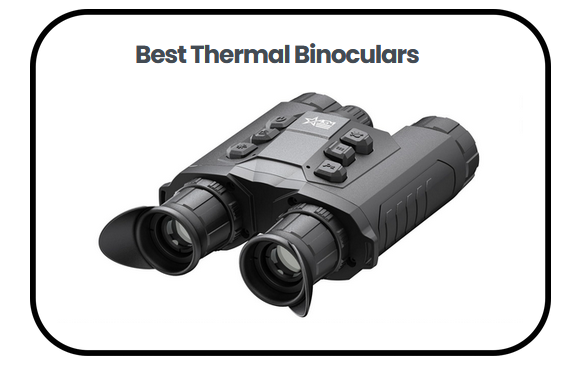
I have spent a great deal of time researching and evaluating the best thermal binoculars, and I can confidently say that they are among the most powerful observation tools available today. Unlike traditional optics that depend on available light, thermal binoculars work by detecting heat signatures, making them equally effective in total darkness, heavy fog, rain, and other challenging conditions that would render standard devices useless. What truly sets the best thermal binoculars apart is their combination of high resolution imaging, long range detection, smart connectivity, and rugged durability all packed into a device designed for real world field use. Whether you are a hunter, wildlife enthusiast, security professional, or outdoor adventurer, the right thermal binocular can completely transform how you observe and interact with your environment.
In this guide, I will cover everything you need to know, including the key features to look for, my top product picks, a detailed buying guide, and answers to the most common questions, so you can find the perfect thermal binocular for your specific needs.
Here is a summary of the Best Thermal Binoculars:
- Pulsar Merger LRF XT50 2-16x50mm Thermal Imaging Binoculars — Best Overall
- ATN Binox 6 Dual Multispectral 6-48x25mm Thermal Imaging Binocular — Best Multispectral Option
- AGM Global Vision ObservIR CMOS 5.5-22x25mm Thermal Imaging Binocular — Best Compact Dual Spectrum Option
- Guide USA TN Series LRF TN650 2.8-22.4x50mm Thermal Binocular — Best for Ease of Use
- Pulsar Merger LRF XP35 2-16x1in Thermal Imaging Binoculars — Best Mid Range Option
- AGM Global Vision Voyage LRF FB75-640 Fusion Thermal & Optical Dual Spectrum Binoculars — Best Premium Option
- AGM Global Vision ObservIR LRF 35-384 Thermal & Digital Day/Night Vision Binocular — Best for Day and Night Versatility
Best Thermal Binoculars
1)Pulsar Merger LRF XT50 2-16x50mm Thermal Imaging Binoculars
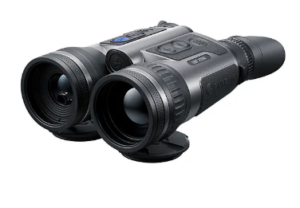 The Pulsar Merger LRF XT50 2-16x50mm Thermal Imaging Binoculars delivers a high level of performance that places it firmly among the best thermal binoculars for long range observation, surveillance, and field tracking. Built around a 1280×1024 with 12µm high definition thermal sensor, it produces highly detailed imagery with strong target definition even in challenging environments. The clarity remains consistent across varying distances, making it suitable for users who require dependable recognition of heat signatures in both open terrain and complex backgrounds.
One of the most impressive aspects of this model is its sharp and stable imaging capability. The device uses lossless pixel to pixel image transfer, which preserves detail during zooming and helps maintain a natural viewing experience without excessive distortion. Combined with advanced image stabilization, the binoculars reduce shakiness during handheld use, allowing smoother observation during extended viewing sessions. This makes it especially useful when tracking moving subjects or scanning wide areas at higher magnification.
Performance over distance is another major strength. The integrated laser range finding system provides accurate measurements up to 1640 yards, while thermal detection capability reaches approximately 2500 yards for hot objects. This level of reach gives users strong situational awareness at long distances, supporting tasks that require both detection and precise distance estimation. It enhances confidence when assessing targets in open landscapes or low visibility conditions.
Connectivity and smart functionality are also well developed. With built in Wi Fi support and Stream Vision 2 compatibility, the device connects easily to Android and iOS smartphones. Users can view real time images on mobile devices, transfer captured media, update firmware, and remotely manage key functions. This adds flexibility for both field documentation and shared monitoring, making the binoculars more versatile in professional and recreational use. The built in photo and video recording system, supported by 64GB of internal memory, allows users to capture and store high quality thermal footage without needing external storage solutions.
Overall, the Pulsar Merger LRF XT50 offers a strong combination of high resolution thermal imaging, long range detection, image stability, and smart connectivity. It is designed for users who need precision and clarity in demanding environments while maintaining ease of use and digital integration.
Pros
- High resolution 1280×1024 thermal sensor delivers detailed and sharp imagery
- Strong image stability improves viewing comfort during handheld use
- Long range detection up to 2500 yards enhances situational awareness
- Accurate laser range finder up to 1640 yards supports precise distance measurement
- Built in recording with 64GB storage allows easy capture of photos and videos
- Wi Fi connectivity with Stream Vision 2 enables mobile control and live viewing
- Smooth zoom performance maintains clarity at higher magnification levels
Cons
- High performance features may require a learning curve for new users
2)ATN Binox 6 Dual Multispectral 6-48x25mmThermal Imaging Binocular
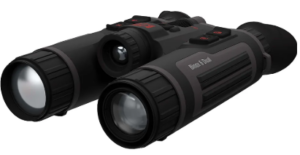
The ATN Binox 6 Dual Multispectral 6-48x25mm Thermal Imaging Binocular is a highly advanced observation tool designed for users who need both thermal and digital night vision performance in a single system. It combines multispectral imaging with smart processing features to deliver clear, adaptable viewing across different environments. With its blend of thermal detection and full color optical imaging, it offers strong versatility for both day and night field use.
Image clarity is significantly enhanced by the high transmission germanium lens, which improves thermal sensitivity and delivers brighter, more defined heat signatures. This is further supported by the Ultra HD 4K CMOS day sensor, which provides sharp visual detail during daylight conditions and works alongside IR assisted night vision capable of reaching up to 350 meters. The ATN SharpIR AI enhancement system improves edge definition and contrast dynamically, helping users distinguish targets more effectively in complex environments.
One of the most practical features is the dual view switching system, which allows instant transitions between thermal, day, and night modes. This flexibility makes it easier to adapt quickly to changing conditions without interrupting observation. The wide dynamic range processing also improves visibility in scenes with mixed lighting, ensuring details remain visible in both bright and dark areas. Multiple color palettes further allow users to customize their viewing experience while reducing eye strain during long sessions.
For long range accuracy, the integrated laser rangefinder provides distance measurements up to 1000 yards, supporting better judgment in tracking and target assessment. The hot point tracking function quickly identifies and follows heat sources, improving responsiveness in fast moving situations. Combined with smart IR and DeFOG modes, the binoculars maintain clarity even in foggy or low visibility conditions.
Recording and connectivity features add strong value for documentation and remote use. The device supports onboard 4K and 1080p video recording with 64 GB of internal storage, making it easy to capture high quality footage directly in the field. Built in Wi Fi enables live streaming and mobile device integration, allowing users to share or monitor observations in real time. The rugged magnesium housing with IP67 protection ensures durability in harsh environments, while tripod compatibility adds stability for extended viewing sessions. Dual replaceable 18650 batteries provide up to 8 hours of operation, supporting longer field activities without frequent recharging.
Overall, the ATN Binox 6 Dual Multispectral binocular stands out as a highly versatile and technologically rich system suitable for demanding users who require both thermal and digital imaging in one platform.
Pros
- High transmission germanium lens improves thermal clarity and brightness
- Ultra HD 4K CMOS sensor delivers sharp daytime imaging
- Dual view switching allows fast transitions between thermal and night modes
- Integrated 1000 yard laser rangefinder supports accurate distance measurement
- AI enhanced imaging improves edge definition and contrast
- Multiple color palettes reduce eye fatigue and improve viewing comfort
- Onboard 4K and 1080p recording with 64 GB storage supports documentation
- Rugged IP67 magnesium housing offers strong durability
- Up to 8 hours battery life with replaceable batteries
Cons
- Advanced features may feel complex for first time users
3)AGM Global Vision ObservIR CMOS 5.5-22x25mm Thermal Imaging Binocular
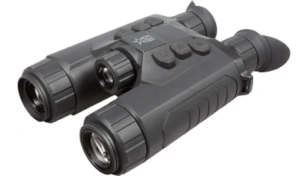
The AGM Global Vision ObservIR CMOS 5.5-22x25mm Thermal Imaging Binocular is a compact and capable dual spectrum system designed for users who need both thermal and digital viewing in one device. It combines a high sensitivity 12 micron thermal sensor with advanced digital imaging. This helps deliver clear detection in both day and night conditions. The system is built for field use where reliability and clarity matter most.
Image performance is supported by digital image processing technology that improves contrast and target definition. The ultra low illumination optical channel works with the built in IR illuminator to enhance visibility in dark environments. Users can switch between thermal and digital modes for flexible observation. The 1x, 2x, and 4x digital zoom options allow simple adjustment for closer inspection without losing control of the image.
Long range functionality is another key strength. The built in eye safe laser rangefinder reaches up to 1000 meters for accurate distance readings. A digital magnetic compass and built in GPS module add strong situational awareness. These tools help users maintain orientation and location tracking in remote areas.
Recording and connectivity features make the device useful for documentation and sharing. It supports video and audio recording along with snapshot capture. All files are stored on 64 GB of built in EMMC storage. Wi Fi hotspot support allows fast data transfer to mobile devices. Standby mode and auto screen off functions help extend battery life during field use.
Durability is also a major advantage. The rugged housing with rubber overmolding improves grip and impact resistance. It is also dustproof, which makes it suitable for harsh environments. The unit supports external power input and can run for up to 8 hours on a single charge, giving it good endurance for extended sessions.
Overall, the AGM ObservIR CMOS binocular offers a balanced mix of thermal detection, digital imaging, navigation tools, and recording features. It is well suited for users who need a practical and versatile multispectral observation device.
Pros
- High sensitivity 12 micron thermal sensor improves detection clarity
- Dual spectrum thermal and digital system supports flexible use
- Built in IR illuminator enhances low light performance
- Eye safe 1000 meter laser rangefinder improves distance accuracy
- GPS module and digital compass improve navigation support
- 64 GB storage allows extended recording and capture
- Wi Fi hotspot enables easy data transfer
- Rugged and dustproof housing improves durability
- Good battery life with power saving features
Cons
- Limited optical zoom range compared to some higher end models
4)Guide USA TN series LRF TN650 2.8-22.4x50mm Thermal Binocular
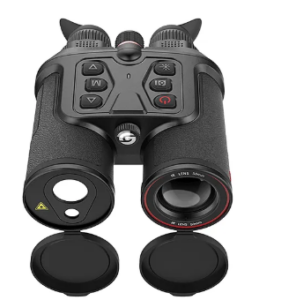
The Guide USA TN series LRF TN650 2.8-22.4x50mm Thermal Binocular is designed for users who value comfort, clarity, and efficient target detection in the field. It fits well among the best thermal binoculars due to its balanced performance and user friendly layout. The classical design gives it a familiar feel, while the structure supports steady handling during extended observation sessions.
The ergonomic design improves overall usability, allowing users to hold and operate the device with less strain over time. As a result, long viewing periods feel more comfortable and controlled. In addition, the button placement supports quick access to key functions, which helps reduce delays when adjusting settings in the field. This contributes to smoother operation during active use.
Image quality is another strong point of this binocular. It delivers high quality thermal visuals that help users detect and identify heat sources with clarity. Furthermore, the display maintains good detail across different zoom levels, supporting better observation at both short and longer distances. This makes it useful in a wide range of environments where clear imaging is required.
Target acquisition is efficient and responsive. The system supports quick location of heat signatures, which helps users react faster in dynamic situations. At the same time, the integrated laser rangefinder improves distance measurement accuracy, giving users better awareness of how far targets are. This combination enhances confidence when scanning large areas.
Ease of observation is maintained throughout use. The binocular is designed to reduce unnecessary complexity, so users can focus on viewing rather than constant adjustments. Moreover, the layout supports intuitive operation, which is helpful for both experienced users and those new to thermal devices.
Overall, the Guide USA TN650 offers a practical mix of comfort, image clarity, and quick targeting capability. It is well suited for users who want a dependable thermal binocular with straightforward operation and solid field performance.
Pros
- Ergonomic design improves comfort during long use
- High quality image supports clear detection and identification
- Quick target location improves response time
- Integrated laser rangefinder enhances distance awareness
- Simple controls support easy operation
- Classical design offers familiar handling and stability
Cons
- May require adjustment period for optimal handling
5)Pulsar Merger LRF XP35 2-16x1in Thermal Imaging Binoculars
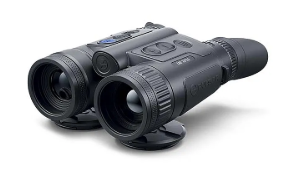
The Pulsar Merger LRF XP35 Thermal Imaging Binoculars with Laser Range Finder delivers reliable performance for users who need clarity, distance capability, and comfort. It ranks among the best thermal binoculars because it balances strong imaging with durable construction. The design supports both professional field work and recreational observation, while maintaining consistent results in different environments.
The 640×480 microbolometer thermal sensor produces clear and detailed visuals. As a result, users detect and identify heat signatures with confidence. In addition, the image stays sharp across varying conditions, which improves visibility in low contrast or obscured environments. This level of clarity helps users make better decisions during observation.
The binocular offers a detection range of up to 1800 meters, allowing users to monitor wide areas effectively. It maintains reliable target visibility at extended distances, which proves useful in open terrain. This capability supports activities that require both scanning and identification over large spaces.
The integrated laser rangefinder measures distances up to 1000 meters with strong accuracy. Therefore, users assess target distance more precisely. This feature improves situational awareness and supports better tracking. It also builds confidence when working in unfamiliar or expansive environments.
The magnesium alloy housing protects the unit from harsh conditions while keeping it manageable in weight. At the same time, the ergonomic layout improves handling during long sessions. Users access controls easily and adjust settings quickly without interrupting observation.
Overall, the Pulsar Merger LRF XP35 combines strong imaging, reliable range performance, and a rugged build. It suits users who need a practical and effective thermal binocular for extended use in demanding conditions.
Pros
- High resolution 640×480 thermal sensor delivers clear and detailed imaging
- Detection range up to 1800 meters supports long distance observation
- Integrated laser rangefinder improves distance accuracy up to 1000 meters
- Durable magnesium alloy housing enhances reliability in harsh conditions
- Ergonomic design improves comfort during extended use
- Consistent image quality across different environments
Cons
- Advanced features may require time to fully understand
6)AGM Global Vision Voyage LRF FB75-640 Fusion Thermal & Optical Dual spectrum Binoculars
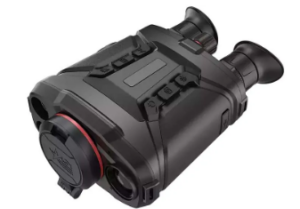
The AGM Global Vision Voyage LRF FB75-640 Fusion Thermal and Optical Dual Spectrum Binoculars is a high performance system designed for users who need advanced imaging and precise situational awareness. It stands among the best thermal binoculars due to its fusion technology and strong detection capabilities. The device combines thermal and optical imaging, which allows users to observe environments with greater depth and clarity.
The dual spectrum image fusion system enhances both detail and target recognition. As a result, users can switch between thermal view, visible light view, or a combined mode depending on the situation. This flexibility improves observation in mixed lighting conditions. In addition, the object highlight feature makes it easier to identify heat sources within complex backgrounds.
Image quality remains consistent and detailed across both channels. The thermal sensor offers a resolution of 640×512, while the optical channel provides 2560×1440 resolution. Furthermore, the NETD rating of less than 20 mK improves sensitivity to small temperature differences. This helps users detect subtle heat variations that might otherwise go unnoticed.
Advanced image processing improves clarity and reduces visual noise. Digital Detail Enhancement sharpens image features, while 3D Dynamic Noise Reduction smooths out distortions. At the same time, adaptive Automatic Gain Control balances brightness and contrast across the scene. These features work together to maintain a stable and clear image in changing conditions.
The optical channel performs well in low light environments. It supports ultra low illumination down to 0.001 lux, which allows users to see clearly even in near darkness. Moreover, the system adapts quickly to lighting changes, ensuring continuous visibility without constant manual adjustment.
Distance measurement and navigation tools add strong field capability. The built in laser rangefinder measures distances up to 1000 meters with high accuracy. In addition, the GPS module, digital magnetic compass, and inclination sensor improve orientation and tracking. These features help users stay aware of position and movement during operations.
Recording and connectivity features support documentation and sharing. The device allows video recording, image capture, and playback directly on the unit. Wi Fi hotspot functionality enables connection to external devices for quick data transfer. A proximity sensor helps save power by turning off the display when not in use, which extends battery life up to 8 hours.
The binocular is built for durability and long term use. Its waterproof IP67 rated housing protects it from harsh weather and dust exposure. This makes it reliable for outdoor conditions where equipment must perform consistently.
Overall, the AGM Voyage LRF FB75-640 offers a powerful combination of fusion imaging, advanced processing, and field ready features. It is well suited for users who require precision, clarity, and adaptability in demanding environments.
Pros
- Dual spectrum fusion improves detail and target recognition
- High resolution thermal and optical sensors deliver clear imaging
- Strong sensitivity detects subtle temperature differences
- Advanced image processing enhances clarity and reduces noise
- Accurate laser rangefinder supports distance measurement up to 1000 meters
- GPS and compass improve navigation and situational awareness
- Recording and Wi Fi features support data capture and sharing
- Durable IP67 waterproof design improves reliability
- Power saving features extend battery life
Cons
- Advanced features may require time to fully understand
7)AGM Global Vision ObservIR LRF 35-384 Thermal & Digital Day/Night Vision Binocular
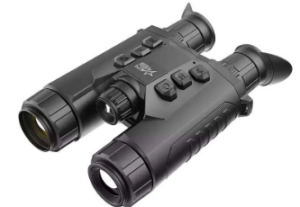
The AGM Global Vision ObservIR LRF 35-384 Thermal and Digital Day Night Vision Binocular offers a versatile dual spectrum system for users who need reliable performance in changing light conditions. It ranks among the best thermal binoculars because it combines thermal detection with high resolution digital imaging. This setup allows users to switch easily between viewing modes while maintaining clear visibility in both day and night environments.
The thermal system uses a 12µm high sensitivity sensor with a 384×288 resolution. As a result, it captures clear heat signatures with good detail. The 4x to 20x thermal magnification range supports both wide area scanning and closer inspection. In addition, digital image processing improves contrast and sharpness, which helps users identify targets more effectively in complex scenes.
The optical channel delivers strong daytime and low light performance. It features a 3840×2160 resolution sensor that produces sharp and detailed visuals. Moreover, the ultra low illumination capability works with the built in IR illuminator to maintain visibility in dark conditions. This combination ensures consistent viewing performance across different lighting environments.
Distance measurement remains accurate and reliable with the built in eye safe laser rangefinder. It measures distances up to 1000 meters, which helps users assess targets with greater precision. The device also includes a digital magnetic compass and a built in GPS module. These tools improve navigation and provide better situational awareness in the field.
The viewing experience stays comfortable due to the 1920×1080 resolution OLED display. It presents images with good clarity and smooth detail. At the same time, users can record video and audio or capture snapshots directly on the device. The 64 GB internal storage provides enough space for extended recording sessions. Wi Fi hotspot support allows easy connection to mobile devices for file transfer and live viewing.
Power management features help extend usage time. The binocular runs for up to 8 hours on a single charge. In addition, standby mode and the auto screen off function reduce power consumption when the device is not in active use. External power support adds flexibility for longer sessions in the field.
The rugged housing with rubber overmolding improves durability and grip. It also protects the device from harsh conditions. The waterproof and dustproof design ensures reliable operation in outdoor environments where equipment must perform consistently.
Overall, the AGM ObservIR LRF 35-384 offers a balanced combination of thermal imaging, digital clarity, and field ready features. It suits users who need a dependable and adaptable binocular for both detection and observation tasks.
Pros
- Dual spectrum system supports both thermal and digital viewing
- High sensitivity thermal sensor improves detection accuracy
- Wide magnification range supports flexible observation
- High resolution optical channel delivers sharp daytime imaging
- Built in laser rangefinder improves distance measurement
- GPS and compass enhance navigation awareness
- 64 GB storage supports recording and media capture
- Wi Fi connectivity allows easy data transfer
- Durable waterproof and dustproof construction improves reliability
Cons
- Thermal resolution is lower than some higher end models
You may also like to read:7 Best Thermal Cameras under 500
Advantages of using Best Thermal Binoculars
Superior detection in complete darkness
One major advantage is the ability to detect objects in total darkness. Thermal binoculars do not rely on visible light. Instead, they detect heat differences between objects and their surroundings. This allows users to see clearly even at night or in environments with no lighting at all. As a result, they provide reliable visibility where traditional optics fail.
Strong performance in difficult weather conditions
Another key advantage is consistent performance in challenging weather. Fog, smoke, rain, and dust often reduce visibility for normal optical devices. However, thermal imaging can still detect heat signatures through these obstacles. Therefore, users maintain awareness even when visual conditions are poor or unpredictable.
Long range observation capability
High quality thermal binoculars allow users to detect and monitor targets at long distances. This is especially useful in open environments such as fields, forests, or wide landscapes. Because heat signatures remain visible over distance, users can scan large areas efficiently. This improves early detection and situational awareness.
Improved target recognition and tracking
Advanced thermal systems enhance the ability to recognize and follow moving objects. Heat signatures stand out clearly against cooler backgrounds. This makes it easier to track animals, people, or vehicles. In addition, stable imaging and magnification features help maintain focus on targets during movement.
Better situational awareness with advanced tools
Modern thermal binoculars often include tools such as rangefinders, GPS modules, and digital compasses. These features help users understand distance, location, and direction more accurately. As a result, users can make better decisions in real time. This improves overall awareness in complex environments.
Recording and documentation capability
Another advantage is the ability to record video, audio, and images directly from the device. This allows users to document observations for later review. It also supports analysis, reporting, and sharing of field data. Built in storage and wireless transfer options make the process more convenient.
Comfort and ease of long term use
High quality designs improve comfort during extended use. Ergonomic shapes reduce strain on the hands and eyes. Stable imaging and smooth zoom features also reduce fatigue during long observation sessions. This makes the devices suitable for continuous field work.
Versatility across different environments and applications
Thermal binoculars are useful in many different situations. They can be used for wildlife observation, search tasks, security monitoring, and outdoor exploration. Because they adapt to both day and night conditions, they offer flexibility in changing environments. This makes them a practical tool for a wide range of users.
Factors to Consider When Choosing the Best Thermal Binoculars
Thermal sensor resolution and sensitivity
Thermal resolution and sensor sensitivity determine how clearly heat sources appear on the display. Higher resolution sensors produce sharper images, which makes it easier to distinguish objects at different distances. Sensitivity, often measured in NETD, affects how well the device detects small temperature differences. Better sensitivity improves performance in rain, fog, and low contrast environments.
Detection range and target identification distance
Detection range shows how far a device can detect a heat source, while identification distance reflects how far a user can clearly recognize what the object is. A longer detection range helps in wide open areas, especially for scanning large landscapes. Strong identification performance ensures that distant objects are not only visible but also distinguishable.
Optical performance and digital magnification
Optical clarity and digital zoom determine how well details are preserved when viewing distant targets. High quality optics reduce distortion and maintain image sharpness across different zoom levels. Effective digital magnification allows users to inspect objects more closely without losing too much detail. A balanced system ensures both wide scanning and close analysis.
Dual spectrum and imaging modes
Many modern thermal binoculars offer multiple viewing modes, including thermal, digital day, and night vision. Dual spectrum systems combine these channels to improve detail and target recognition. Switching between modes allows users to adapt quickly to changing lighting conditions. This flexibility is important for both daytime and nighttime operations.
Rangefinding and navigation tools
Integrated laser rangefinders help users measure distance accurately, which improves situational awareness. Additional tools such as GPS modules, digital compasses, and inclination sensors support better orientation in the field. These features are especially useful in large or unfamiliar environments where navigation is critical.
Recording and connectivity features
Recording functions allow users to capture video, audio, and still images for later review. Internal storage capacity determines how much content can be saved without external devices. Wireless connectivity such as Wi Fi enables fast transfer of files to smartphones or tablets. These features are important for documentation and sharing observations.
Battery life and power management
Battery performance directly affects how long the device can be used in the field. Longer battery life supports extended observation sessions without interruption. Power saving features such as standby mode and auto screen off help conserve energy. External power options provide additional flexibility for longer operations.
Durability and environmental resistance
Thermal binoculars are often used in harsh outdoor conditions, so build quality is important. Rugged housing protects internal components from impact and wear. Water and dust resistance ensure reliable performance in rain, humidity, and dusty environments. A durable design increases the lifespan and reliability of the device.
FAQs
What makes thermal binoculars better than standard night vision devices?
Thermal binoculars detect heat signatures instead of relying on light. This allows them to work effectively in complete darkness, fog, and smoke. They also provide better detection of hidden or camouflaged targets.
Are higher resolution thermal sensors always better?
Higher resolution generally improves image clarity and detail. However, performance also depends on sensor sensitivity, optics, and processing technology. A balanced system often performs better than resolution alone.
Do all thermal binoculars include recording and GPS features?
Not all models include these features. Many modern devices offer recording and connectivity, while advanced models may also include GPS, rangefinders, and navigation tools. Feature availability depends on the design and intended use.
Conclusion
After exploring all of these options in depth, it’s clear that the best thermal binoculars represent a major leap forward in observation technology. Each device on this list brings something unique to the table, whether that is exceptional high-resolution imaging, multispectral versatility, or fusion-powered performance. What unites them all is their ability to perform where standard optics fall short, in darkness, bad weather and at long range. With features like integrated laser rangefinders, GPS navigation, onboard recording and rugged weatherproof builds, modern thermal binoculars are as capable in the field as they are technologically advanced. Whether you’re a wildlife observer, security professional, or outdoor enthusiast, investing in a quality thermal binocular means investing in clarity, confidence and safety no matter the conditions.