
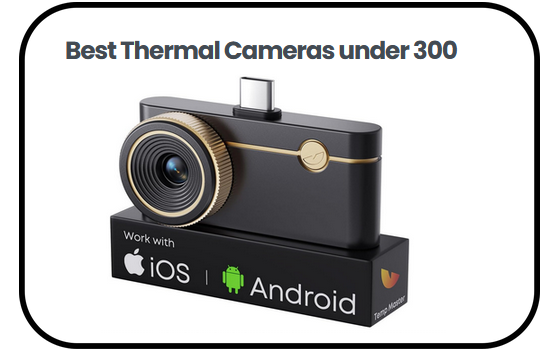
The best thermal cameras under 300 have completely changed the way I approach diagnostics and inspections, and I was genuinely surprised by how capable and affordable today’s options have become. These devices bring professional-grade thermal imaging within reach of homeowners, technicians, and hobbyists alike, without the steep price tag traditionally associated with the technology. Whether you need to track down hidden heat leaks, troubleshoot electrical faults, inspect HVAC systems, or examine PCB components, these cameras deliver impressive resolution, wide temperature ranges, and smart detection features that make the job faster and safer.
In this guide, I’ll walk you through everything you need to know, including key features to look for, my top picks across different use cases, a practical buying guide, and answers to the most common questions, so you can confidently choose the right thermal camera for your needs.
Here is a summary of the Best Thermal Cameras under 300:
- TOPDON TC002C Duo Thermal Camera — Best Overall
- Thermal Master P3 Thermal Camera — Best for PCB & Electronics Inspection
- FLIR One Thermal Imaging Camera — Best for Beginners
- HSFTOOLS F2W Thermal Camera — Best Standalone Design
- TOPDON TC001 Thermal Camera — Best for Android Users
- GOYOJO GH340 Thermal Imaging Camera — Best for Durability & Field Use
Best Thermal Cameras under 300
1)TOPDON TC002C Duo Thermal Camera
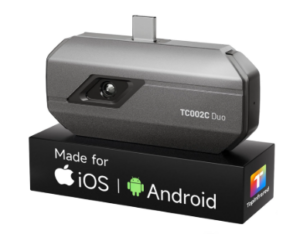
The TOPDON TC002C Duo Thermal Camera positions itself as one of the best thermal cameras under 300 by combining portability, strong imaging performance, and wide device compatibility. Designed for everyday users and professionals alike, it transforms a smartphone or tablet into a capable thermal imaging tool without the need for bulky standalone equipment.
One of its most practical advantages is its universal USB-C compatibility. It connects seamlessly with modern smartphones and tablets across iOS, Android, and even Windows platforms, making it highly versatile for users who switch between devices. This broad compatibility ensures that you can rely on a single thermal solution across multiple gadgets, although it currently excludes Mac devices and some newer Android versions.
The imaging performance is impressive for its price category. With a native resolution of 256 × 192 enhanced to 512 × 384 through TISR technology, the camera delivers sharper and more detailed thermal images than many entry-level alternatives. The 25Hz refresh rate keeps motion smooth, while the 40mK thermal sensitivity allows it to detect subtle temperature differences. This makes it suitable for tasks that require precision, such as identifying heat leaks, electrical faults, or mechanical issues.
Another strong point is its wide temperature range, spanning from -4°F to 1022°F. This flexibility allows it to handle a variety of scenarios, from checking insulation problems in cold environments to diagnosing overheating components. Real-time temperature monitoring, waveform visualization, and customizable color palettes add to its usability, giving users better control over how thermal data is interpreted. The ability to capture both photos and videos further enhances documentation and reporting.
In terms of practical use, the camera supports measurements from a safe distance of up to 16.4 feet. This makes it useful for professionals like HVAC technicians, electricians, and automotive specialists, as well as homeowners performing routine inspections. Beyond technical applications, it can also be used creatively, such as for outdoor exploration or fun activities with family.
The compact and lightweight design makes it highly portable. Measuring just a few inches and weighing around 30 grams, it easily fits into a pocket or small bag. When paired with the dedicated mobile app, users gain intuitive control and quick access to features, making it convenient for both quick checks and extended use.
Pros
- Broad compatibility with USB-C smartphones and tablets across multiple platforms
- Enhanced image clarity with super resolution technology
- Smooth performance with a responsive refresh rate
- Wide temperature detection range suitable for many applications
- Lightweight and highly portable design
- Supports real time monitoring, image capture, and video recording
Cons
- Not compatible with Mac devices
2)Thermal Master P3, Thermal Camera
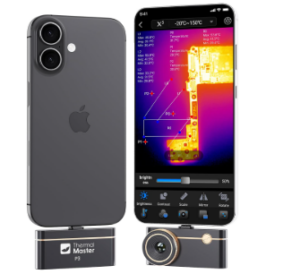
The Thermal Master P3 Thermal Camera earns its place among the best thermal cameras under 300 by focusing on precision, portability, and advanced imaging features. It is designed for users who need accurate thermal diagnostics, especially in electronics and PCB inspection; therefore, it appeals to both professionals and serious hobbyists looking for detailed analysis in a compact form.
The camera features an 8mm macro lens with manual focus, which significantly improves close range inspection. It enables detection of extremely small current leaks, making it highly effective for PCB diagnostics; as a result, users can identify hidden faults in circuits that would otherwise go unnoticed. The manual focus capability also allows better control when examining delicate electronic components, ensuring clarity even at very close distances.
The imaging performance is enhanced through X³ infrared technology, which improves overall detail clarity. While the native resolution is 256 × 192, it is upscaled to 512 × 384, delivering sharper thermal images; in addition, the high sensitivity of 0.035°C allows the device to detect even the slightest temperature differences. It becomes easier to spot overheating components and subtle anomalies, and the 15× digital zoom helps maintain visibility from a safer distance.
The wide temperature range from -4°F to 1112°F makes this camera suitable for a variety of applications. It can handle both low temperature environments and high heat industrial systems; meanwhile, the ±3.6°F accuracy ensures reliable readings. The TruePix algorithm stabilizes measurements, and environmental compensation improves consistency, so users can depend on it for electrical inspections, HVAC troubleshooting, and maintenance tasks.
The device includes a smart app that requires no registration, allowing immediate use after connection. Users can access features such as 12 color palettes, real time hot and cold spot tracking, and temperature alarms; moreover, the picture in picture mode supports better comparison between thermal and visual data. This setup helps streamline diagnostics and makes report generation more efficient.
The compact design and wide compatibility enhance usability across different devices. It supports iPhones, Android devices, iPads, and PCs via USB-C, and also includes a Lightning adapter and extension cable for added flexibility; consequently, it adapts well to different working environments. Weighing only 26.3 grams and consuming minimal power, it can operate for several hours, making it practical for fieldwork and tight inspection spaces.
Pros
- Excellent macro lens for detailed PCB inspection and micro fault detection
- High resolution imaging with enhanced clarity through X³ technology
- Detects very small temperature differences for precise diagnostics
- Wide temperature range suitable for both low and high heat applications
- User friendly app with advanced tools and no registration required
- Lightweight design with strong portability and low power consumption
Cons
- Manual focus may require adjustment for beginners
3)Flir One Thermal Imaging Camera
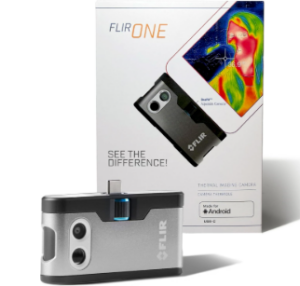
The FLIR One Thermal Imaging Camera USB-C is a strong option among the best thermal cameras under 300. It offers reliable performance in a compact form. It is designed for Android users who want simple thermal imaging; therefore, it suits both home inspections and light professional work.
This camera connects directly to Android devices through a USB-C port. It works with popular models like Samsung Galaxy and Google Pixel; in addition, the plug and play design makes setup quick. Users can start scanning within seconds, which improves convenience during inspections.
The imaging system uses VividIR technology to enhance clarity. It upscales the native 80×60 resolution to 240×180; as a result, images appear sharper and easier to interpret. The MSX technology blends thermal and visual details in real time, so edges and shapes become clearer during analysis.
The device also includes built in inspection guides within the app. These guides walk users through common problems step by step; for example, they help identify air leaks or moisture issues. This feature is useful for beginners, and it also speeds up routine checks for experienced users.
Temperature measurement is accurate within ±3°C or ±5 percent under normal conditions. This level of precision is suitable for everyday diagnostics; however, it works best within specific environmental ranges. Even so, it provides consistent readings for most home and maintenance tasks.
Durability is another advantage of this device. It is built to handle jobsite conditions and can survive drops from up to 1.5 meters; therefore, it is reliable in demanding environments. This rugged design adds confidence when using it in the field.
Pros
- Easy compatibility with a wide range of USB C Android devices
- Enhanced image clarity with super resolution and MSX technology
- Helpful in app guides for step by step inspections
- Reliable temperature measurement for everyday use
- Durable construction suitable for jobsite conditions
Cons
- Lower native resolution compared to some newer models
4)HSFTOOLS F2W Thermal Camera
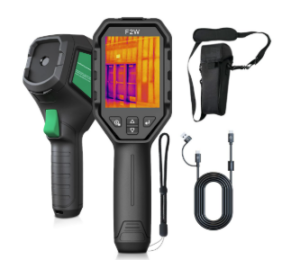
The HSFTOOLS F2W Thermal Camera 640×480 Super Resolution stands out among the best thermal cameras under 300. It offers strong imaging performance and a self contained design; therefore, it works well for both beginners and professionals. Unlike smartphone based models, it includes a built in screen, which adds convenience during field use.
The imaging quality is one of its key strengths. It uses a 256×192 detector and enhances it to 640×480 through a live super resolution algorithm; as a result, images appear sharper and more detailed. The 3.2 inch LCD screen displays thermal data clearly, and the sensitivity below 40 mK helps detect subtle temperature differences. This makes it suitable for tasks that require precision.
The camera also supports wireless connectivity for easy sharing. It connects to smartphones and tablets via Wi Fi, so users can transfer images quickly. In addition, switching between seven color palettes is simple with a single button. This flexibility helps adapt the display to different environments and inspection needs.
The wide temperature range from -4°F to 1022°F increases its versatility. It automatically tracks the hottest, coldest, and center points; meanwhile, users can define additional spots for monitoring. This feature speeds up fault detection, especially during electrical or mechanical inspections.
Accuracy is supported by an advanced VOx detector. It can detect temperature differences as small as 0.04°C, which improves diagnostic precision. Users can adjust emissivity and distance settings; therefore, readings remain reliable across different materials and surfaces.
The design focuses on durability and long term use. It includes 16GB of storage, allowing thousands of images to be saved. The rechargeable battery lasts up to six hours, and power saving features help extend usage time. In addition, the device has a protective lens cover and is rated for drops and dust resistance, which makes it dependable in tough conditions.
Pros
- High resolution imaging with clear and detailed thermal output
- Built in display removes need for external devices
- Wireless image transfer for quick sharing and analysis
- Wide temperature range suitable for many applications
- Accurate readings with adjustable emissivity settings
- Durable build with good battery life and internal storage
Cons
- Bulkier than smartphone connected thermal cameras
5)TOPDON TC001 Thermal Camera
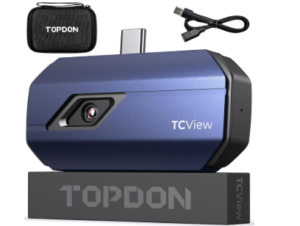
The TOPDON TC001 Thermal Camera for Android ranks among the best thermal cameras under 300 because it balances high resolution, portability, and efficient power use. It is designed for Android users who need accurate thermal imaging on the go; therefore, it fits well in both professional and technical inspection work.
The camera starts with a 256×192 thermal image and then upgrades it to 512×384 using TISR technology. As a result, thermal details appear sharper and more defined during inspection tasks. In addition, it consumes only 0.35W of power, which allows longer usage when connected to a smartphone or tablet. Depending on the device battery size, it can operate for about 4 to 7 hours, which supports extended field work.
Temperature detection is precise and covers a wide range from -4°F to 1022°F. Moreover, it delivers accuracy within ±3.6°F or 2 percent, along with fine 0.1°C measurement capability. This makes it useful for identifying heat issues in electrical systems, mechanical equipment, and building inspections. It also generates waveform graphs showing high, low, and average temperatures, which helps users analyze changes over time.
The app interface offers flexible measurement options for detailed analysis. Users can select point, line, or surface measurements, and each mode supports multiple detection areas. Consequently, up to nine temperature zones can be monitored at once. In addition, nine color palettes allow users to adjust how temperature differences are displayed, making interpretation easier in different environments.
Image enhancement features improve clarity and usability. The system adjusts sharpness and contrast to make thermal scenes easier to read; furthermore, image fusion combines infrared and visible light for better context. Rotation support also helps users view results from different angles without moving the device, which improves workflow efficiency.
The design is compact and lightweight, making it easy to carry and use in tight spaces. It connects directly to Android devices through USB with OTG support, and it includes a 19.7 inch cable for added flexibility. In addition, the protective EVA case and cleaning cloth help keep the device safe during transport. Because of its size and adaptability, it is well suited for both field inspections and everyday diagnostic tasks.
Pros
- High resolution imaging with effective super resolution enhancement
- Low power consumption allows extended use with mobile devices
- Wide temperature range suitable for many inspection tasks
- Multiple measurement modes with advanced temperature tracking
- Image fusion and enhancement improve clarity and detail
- Compact and portable design with protective accessories included
Cons
- Not compatible with iOS devices
6)GOYOJO GH340 Thermal Imaging Camera
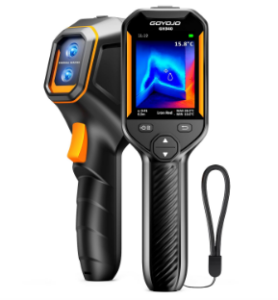
The GOYOJO GH340 Thermal Imaging Camera stands out among the best thermal cameras under 300 because it combines high resolution imaging, smart detection features, and durable construction. It is designed for users who need reliable performance in home inspection, HVAC work, and electrical diagnostics; therefore, it suits both professionals and serious DIY users.
The imaging system is one of its strongest advantages. It delivers a 640×480 super resolution output, which is significantly sharper than standard entry level thermal cameras. In addition, the 2MP visible light camera works alongside the infrared sensor to outline objects clearly as soon as the device is activated. With a 25Hz refresh rate, motion appears smooth, which improves real time scanning during inspections.
Temperature detection is highly responsive and practical for field use. The camera automatically tracks center, high, and low temperature points, while also supporting three point heat monitoring. Moreover, it operates within a wide range from -4°F to 1022°F, which makes it suitable for both cold and high heat environments. When temperature limits are reached, alerts appear instantly on the screen, helping users identify problems quickly during inspections.
Flexibility is further improved through multiple imaging modes. The device supports thermal mode, fusion mode, and conventional light mode. At the same time, it offers six color palettes such as white hot, black hot, iron red, and rainbow. As a result, users can adjust the display based on different inspection needs, which improves clarity in varied working conditions.
The camera is also built for demanding environments. It offers up to 8 hours of runtime and charges via USB C for convenience. Additionally, it is drop resistant up to 6.6 feet and carries an IP54 rating, which protects it from dust and splashes. Because of this, it can handle rough jobsite conditions without frequent concerns about damage.
Accuracy is another important strength. It delivers temperature readings within ±2°C, and it allows emissivity adjustments based on different materials like wood or brick. This improves measurement reliability across various surfaces. Therefore, it is useful for tasks such as detecting insulation issues, checking water leaks, and troubleshooting electrical or mechanical systems.
Pros
- High 640×480 super resolution for detailed thermal imaging
- Dual camera system improves object clarity and identification
- Automatic temperature tracking with high and low alerts
- Multiple imaging modes and adjustable color palettes
- Strong durability with drop resistance and IP54 protection
- Accurate readings with emissivity customization
Cons
- Requires proper settings adjustment for full image export features
You may also like to read:6 Best Night Vision Binoculars under $100
Advantages of Using Thermal Cameras under 300
Affordable access to thermal technology
These cameras open thermal imaging to a wide range of users. Instead of paying for expensive industrial tools, users achieve useful results at a lower cost. Therefore, homeowners, technicians, and hobbyists gain access to thermal diagnostics without financial pressure.
Useful for home inspection tasks
These devices help users detect common household issues. For example, they reveal heat loss, insulation gaps, moisture buildup, and electrical hotspots. In addition, early detection helps users prevent small problems from becoming costly repairs.
Support for HVAC and electrical troubleshooting
Technicians use these cameras to locate faults in HVAC and electrical systems. Temperature changes appear instantly on the display, which makes problem areas easy to identify. As a result, repair work becomes faster and more precise.
Portable and easy to use design
Manufacturers design most models in this range to stay compact and lightweight. Users carry them easily between job sites or use them in tight spaces. In addition, many models connect directly to smartphones or include simple controls that reduce setup time.
Improved diagnostics with smart features
Many cameras include tools such as temperature tracking, color palettes, and image fusion. These features help users interpret thermal data more clearly. Consequently, users make faster and more confident decisions during inspections.
Good balance of resolution and performance
These cameras enhance resolution through built in processing technologies. Users see clearer thermal images and detect meaningful temperature differences. Therefore, they complete most everyday and professional tasks with sufficient detail.
Versatile application range
Users apply these cameras across many fields, including automotive repair, building inspection, and electronics testing. This flexibility allows one device to support multiple work scenarios. As a result, users get more value from a single purchase.
Improved safety during inspections
These cameras help users identify issues from a safe distance. For example, users detect electrical faults or overheating components without direct contact. Therefore, they reduce risk while improving inspection efficiency.
Factors to Consider When Choosing the Best Thermal Cameras under 300
Image resolution and clarity
Higher resolution improves image detail and makes temperature differences easier to see. Users identify small faults more accurately when resolution increases. Therefore, resolution strongly affects inspection quality.
Temperature range and accuracy
A wide temperature range allows the camera to handle both cold and hot environments. High accuracy ensures reliable readings during inspections. Together, these features determine overall measurement reliability.
Thermal sensitivity level
Higher thermal sensitivity helps the camera detect small temperature changes. Users spot subtle issues such as minor electrical leaks or early stage faults more easily. As a result, sensitivity improves diagnostic precision.
Display and usability features
A clear display helps users interpret thermal images without confusion. Features like color palettes and image modes improve visibility and control. Therefore, good usability speeds up inspection work.
Connectivity and compatibility
Many cameras connect to phones, tablets, or computers for analysis. Users benefit when the device supports multiple platforms. This flexibility improves workflow and data sharing.
Battery life and power consumption
Long battery life supports extended field use without interruptions. Low power consumption allows longer operation between charges. Therefore, battery efficiency directly improves productivity.
Durability and build quality
Strong build quality protects the camera during field use. Drop resistance and environmental protection reduce the risk of damage. As a result, the device performs reliably in tough conditions.
Storage and data management
Sufficient storage allows users to save more images and reports. Efficient data transfer helps users organize inspection results quickly. Therefore, strong storage features improve long term usability.
FAQs
Are thermal cameras under 300 good enough for professional use?
Yes, they support many professional tasks such as HVAC inspection, home diagnostics, and electrical troubleshooting. However, high end industrial cameras still offer greater precision and advanced features.
Can these thermal cameras detect water leaks and insulation issues?
Yes, they detect temperature differences caused by moisture buildup, leaks, and insulation gaps. Users identify these issues quickly through visible thermal patterns.
Do I need technical experience to use a thermal camera?
No, most modern thermal cameras include simple controls and guided apps. Basic understanding helps improve accuracy, but beginners can still use them effectively.
Conclusion
After reviewing all the top contenders, I can confidently say that the best thermal cameras under 300 offer remarkable value for the price. From models built for broad device compatibility and smooth performance to rugged, high-resolution options designed for demanding jobsite conditions, there is a strong choice for every type of user. Whether you are a professional technician diagnosing electrical faults, an HVAC specialist tracking temperature anomalies, or a homeowner trying to improve energy efficiency, these cameras deliver the precision, portability, and smart features needed to get the job done well. With thoughtful consideration of factors like thermal sensitivity, temperature range, battery life, and connectivity, you can find a model that fits your workflow perfectly and delivers long-term value from a single, affordable investment.